
Good engineering skills learnt from nature
Nature is the ultimate master engineer. Our company's core engineering expertise is deeply rooted in Biomimicry—the practice of emulating nature's models, systems, and elements to solve complex human problems sustainably and efficiently. Recognized as one of the world's top eight problem-solving technologies today, biomimicry is the cornerstone of our continuous breakthroughs and provides solutions that profoundly improve human life.
To pass on this profound engineering wisdom, we are deeply committed to advancing STEM (Science, Technology, Engineering, and Mathematics) education. STEM emphasizes hands-on practice, exploration, and interdisciplinary learning. It is designed to cultivate creativity, problem-solving capabilities, and scientific thinking, allowing students to experience the genuine joy of science and engineering.
In our view, nature's engineering miracles are often encoded in mathematics and geometric patterns. Mathematics helps students build rigorous logical thinking. Shape and pattern recognition is an indispensable part of STEM. By observing and drafting shapes found in nature, students grasp essential mathematical concepts such as symmetry, area, and perimeter. More importantly, this process ignites their spatial awareness and creativity—prerequisite qualities for the engineers of tomorrow.
Stepping into the Classroom: Biomimicry Learning Day at Tai Po Old Market Public School
We firmly believe that education must extend beyond the laboratory and into the classroom. Recently, we had the distinct honor of being invited by Tai Po Old Market Public School to host a highly engaging "Biomimicry Learning Day."
During the event, our tutor, Mr. Hung, delivered two captivating lectures to the entire student body, illustrating how we draw inspiration from nature to solve real-world engineering challenges. To translate theory into practice, our expert instructor, Karen, designed a special interactive session titled "The Symmetrical Snowflake."
The snowflake is one of nature's most precise geometric engineering marvels. Towards the end of the lecture, the students' enthusiasm was palpable. Class representatives stepped forward to craft stunning hexagonal snowflake creations with their own hands.
Lesson Plan Sharing: "The Symmetrical Snowflake"
To empower more educators to apply this methodology, I would like to share the essence of tutor Karen's lesson plan:
Activity Objective: By studying the hexagonal symmetry of snowflakes, students will grasp the concept of lines of symmetry, cultivate their STEM mindset, and enhance their mathematical and geometric engineering skills.
Materials: Paper, pencils, rulers, scissors, and glue.
Activity Steps:
Conceptual Inspiration: Introduce the natural symmetry of a hexagonal snowflake and explain the mathematical concept of lines of symmetry.
Engineering Drafting: Distribute snowflake templates and guide students in using rulers and pencils to draft precise hexagons.
Hands-on Execution: Develop hand-eye coordination by teaching students how to cut out perfect hexagonal shapes.
Discovering Patterns: Demonstrate and have students practice identifying and drawing all lines of symmetry on their paper.
Structural Assembly: Have students use glue to assemble the components into a neat snowflake, observing its structural stability and symmetrical beauty.
Independent Exploration: Encourage a scientific mindset by guiding students to discover other hidden lines of symmetry within the shape.
Real-world Application: Discuss how hexagonal symmetrical structures are applied in daily life (e.g., architectural design, paper crafts).
Assessment & Extension: Utilizing customized worksheets, we help students solidify their understanding that a hexagon is a highly symmetrical shape. We further encourage them to apply the principles of symmetry to design other natural patterns, such as flowers and stars, and to proudly present their work to their peers.
Conclusion: Envisioning the Engineers of Tomorrow
Witnessing the exquisite snowflakes created in real-time by the students at Tai Po Old Market Public School filled me with immense pride. Through drafting and assembling these snowflakes, they did not merely learn the definition and characteristics of symmetry; they personally experienced the aesthetic brilliance of nature's symmetry and the profound mysteries of engineering.
STEM education is an imperative trend in modern learning. As a company rooted in engineering and technology, we will continue to champion the philosophy of "learning from nature." By leveraging mathematics and geometric learning—vital components of STEM—we are dedicated to helping the next generation develop their mathematical prowess and spatial awareness.
It is my greatest hope that the children cutting out paper snowflakes today will become the visionary engineers who use biomimicry to change the world tomorrow.

工程來自向大自然學習:從一片小雪花看我們的工程智慧與STEM教育承諾
我經常被問到我們團隊的創新靈感從何而來?我的答案始終如一:「工程師向大自然學習(Engineers learn from nature)」。大自然本身就是最頂尖的工程師。我們公司的核心工程技術,正是建立在「仿生學(Biomimicry)」的基礎上——即模仿生物與自然界解決問題的方式,為改善人類生活提供永續、高效的解決方案。仿生學不僅是當今世界解決問題的八大科技之一,更是我們企業不斷突破的基石。
為了將這份「向大自然學習」的工程智慧傳承下去,我們致力於推廣STEM教育。STEM(科學、技術、工程和數學)強調實踐性、探索性和跨學科性,旨在培養學生的創造力、解決問題的能力以及科學思維,讓學生在學習中體驗到科學和工程的真正樂趣。
在我們看來,大自然的工程奇蹟往往隱藏在數學與幾何圖形之中。數學能幫助學生建立嚴謹的邏輯思維;而圖型學習則是STEM教育中不可或缺的一環。透過觀察和繪製大自然中的圖形,學生不僅能學習到對稱性、面積和周長等數學概念,更能啟發他們的空間感知能力和創造力,這正是未來工程師必備的素質。
走入校園:大埔舊墟公立學校的仿生學習日
我們深信,教育需要走出實驗室,走入校園。日前,我們非常榮幸受到「大埔舊墟公立學校」的邀請,舉辦了一場別開生面的「仿生學習日」。
活動當天,本公司的熊sir, 為全校同學帶來了兩場精彩的仿生學講座,深入淺出地分享了我們如何從大自然中汲取靈感來解決現實世界的工程難題。為了讓理論化為實踐,我們的專業導師Karen特別設計了名為「整齊小雪花」的互動環節。
雪花,是大自然中最精密的幾何工程之一。在講座的尾聲,同學們的反應十分熱烈,各班更派出了學生代表,親手完成了令人驚豔的六角形雪花作品。
「整齊小雪花」活動教案分享
為了讓更多教育者能應用這套方法,我們在此分享Karen導師設計的活動精華:
活動目標: 透過學習小雪花六角型的對稱性,讓學生理解對稱線的概念,培養STEM思維,並提升數學與工程幾何技能。

活動材料: 紙張、鉛筆、尺子、剪刀、膠水。
活動步驟:
概念啟發: 介紹小雪花六角型的自然對稱性,講解對稱線的數學概念。
工程繪圖: 發放小雪花模板,指導學生運用尺子和鉛筆,精準畫出六角型。
動手實踐: 訓練手眼協調,教導學生剪出完美的六角型。
尋找規律: 講解並讓學生練習在紙上找出並畫出所有的對稱線。
結構拼湊: 讓學生用膠水將部件拼湊成整齊的小雪花,觀察其結構的穩定性與對稱美。
自主探索: 引導學生發揮科學家精神,自行找出圖形中隱藏的其他對稱線。
生活應用: 探討如何將六角型對稱結構應用於日常生活中(如建築裝飾、紙質手工藝品等)。
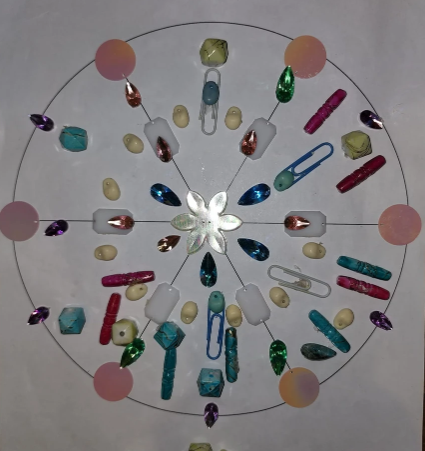
活動評估與擴展: 透過專屬工作紙,幫助學生鞏固「六角型是一種具對稱性圖形」的認知。我們更鼓勵學生利用對稱線原理,創作花朵、星星等其他自然圖案,並進行展示分享。

結語:看見未來的工程師
在大埔舊墟公立學校的活動中,看著同學們即時創作出的精美雪花,我深感欣慰。透過繪製和拼湊小雪花,他們不僅學習到了對稱線的定義和特徵,更親身體驗到了大自然對稱性質的美妙與工程學的奧秘。
STEM教育是現代教育的必然趨勢。作為一家以工程與科技為本的企業,我們將繼續秉持「向大自然學習」的理念,透過數學和圖型學習這些STEM的重要組成部分,協助下一代發展數學技能與空間感知能力。我們期待,今天手中剪著雪花的孩子們,明天將成為運用仿生學改變世界的頂尖工程師!


Comments